
Starting an E-Commerce Business in Durham? Here's What to Know About Warehouse Space
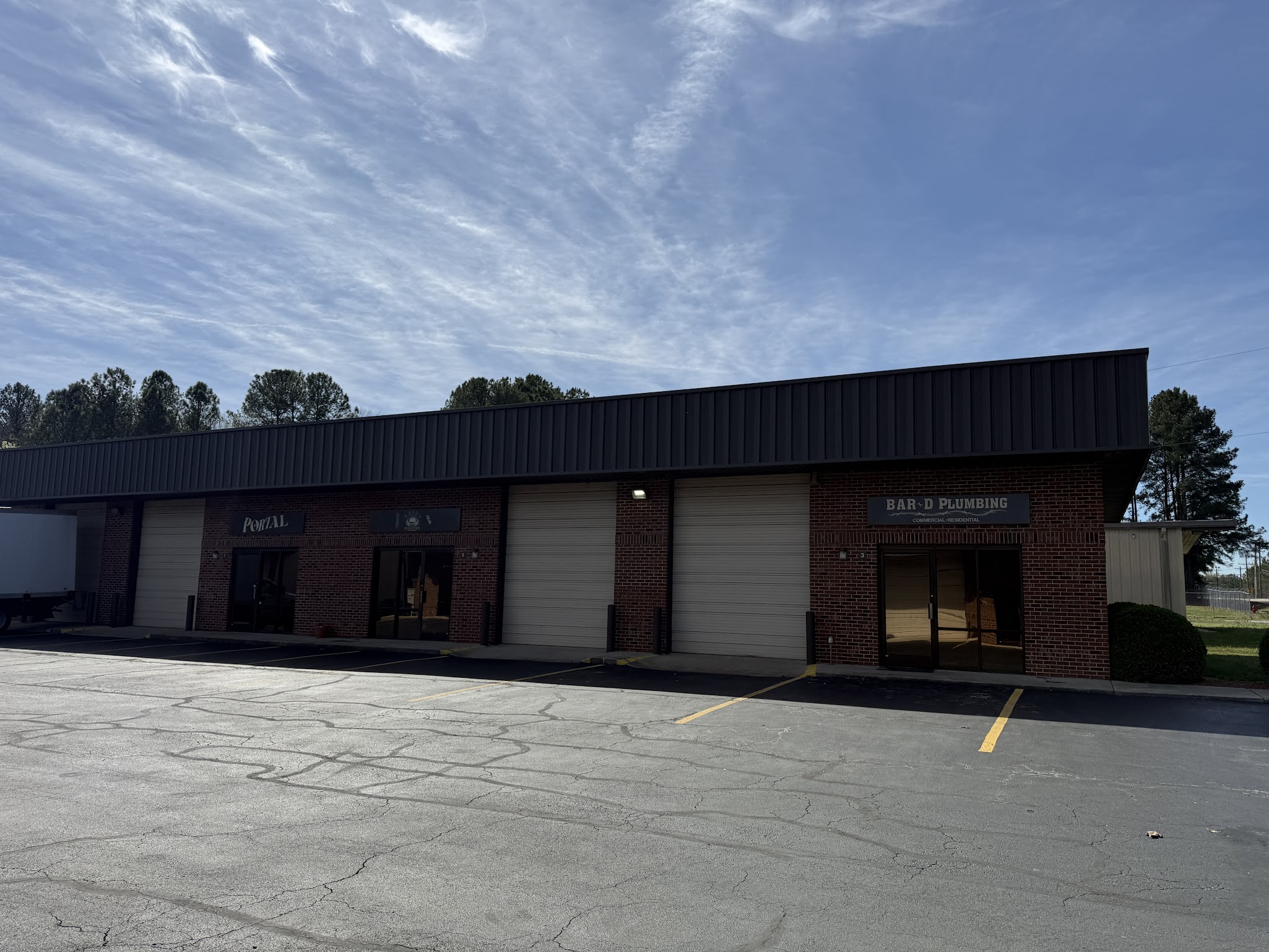
Durham is a serious hub for e-commerce. Research Triangle Park draws logistics talent. I-40 and I-85 are major corridors for distribution. FedEx and UPS regional hubs are nearby. Rent is lower than coastal metros. It’s a legitimate place to run an e-commerce fulfillment operation.
But e-commerce warehouses have specific requirements that general industrial space doesn’t always meet. Here’s what you need to look for and how to size your space.
Why Durham Works for E-Commerce
The location matters. Durham sits at the intersection of I-40 (east-west) and I-85 (north-south). That gives you fast access to the Carolinas and Virginia. FedEx and UPS have regional distribution centers within 30 minutes. Shipping costs are competitive.
The labor pool is strong. RTP brings educated, technical people. Logistics companies operate here, so warehouse operators and fulfillment labor are available. Wages are below coastal metros but skill is high.
Rent is reasonable. $20/SF for flex space in South Durham is cheaper than Charlotte ($23/SF), Raleigh ($22/SF), or anywhere on the coast. That’s 15 to 20 percent less than you’d pay in Charleston or Savannah.
Population density supports last-mile logistics. The Triangle has 2 million people in a concentrated area. If you’re shipping regionally or same-day, Durham geography is ideal. The I-40 corridor connects you to national distribution networks.
What E-Commerce Warehouses Actually Need
Racking-Friendly Clear Height This is non-negotiable. Most e-commerce operators use industrial racking to maximize cubic space. Two-high racking (standard in small warehouses) needs 14 to 16 feet of clear height minimum. Three-high needs 20 to 24 feet.
Get Flex Space units in Durham offer 14 to 20 feet of clear height, which supports two-high racking comfortably. If you scale to three-high later, you’ll move to a larger traditional warehouse. But starting out, 16 to 18 feet of clear height is ideal.
Clean, Dry Environment E-commerce inventory isn’t tolerant of temperature swings or moisture. Books, electronics, clothing all suffer in humidity. Most flex buildings have basic climate control. Ask about HVAC specifications and whether the building maintains temperature and humidity year-round. Older industrial space might not have this.
Cleanliness matters. Your warehouse should have sealed concrete floors, not oil or dirt stains. Rodent and pest control should be professional. You’re not storing heavy equipment; you’re storing customer goods. It needs to be clean.
Power for Packing and Shipping Most e-commerce operations run packing stations (tables with lights and label printers) and maybe a small conveyor or scale system. This requires reliable electrical service. Brownouts or power fluctuations will shut down your operation.
Ask about power reliability and whether the building has backup power or UPS systems. 100-amp service is usually adequate for basic packing operations. If you’re running multiple stations simultaneously, confirm it’s enough.
Loading Access for Daily Pickups FedEx, UPS, and other carriers pick up from your warehouse daily (or multiple times daily). You need a drive-in door or dock door accessible without maneuvering through parked cars or tight spaces. Drivers should be able to back up to your door and load out in 10 to 15 minutes.
Flex spaces with drive-in doors work fine for this. Parking lot layout matters; confirm that your unit’s access isn’t blocked by other tenants or common areas.
Adequate Restroom and Break Area You’ll have packing staff. They need a restroom during their shift. A small break area (sink, cooler, bathroom) matters for retention and morale. Cheap warehouse space often has primitive facilities. Ask about this.
Office or Management Area You need a place to handle customer service, returns processing, and administrative work. This can be minimal (100 to 150 SF desk area) or more involved if you’re doing customer contact in-person. Most flex spaces have integrated office which is ideal.
Sizing Your E-Commerce Warehouse
The big question: how much space do you actually need?
The standard formula is based on SKU count and inventory turns.
SKU (Stock Keeping Unit) is each unique product variant. If you sell blue shirts in sizes S, M, L, XL, that’s four SKUs. If you have 200 unique products, each in three colors, that’s 600 SKUs.
Inventory Depth is how much inventory you hold. A 1-week inventory (ordering new stock every week) is light. A 4-week inventory (holding a month’s worth of stock) is standard. An 8-week inventory (holding two months) is heavy.
The Basic Calculation Each SKU takes roughly 1 to 2 cubic feet of space. A book is maybe 0.5 cubic feet. A shoe box is maybe 0.5 cubic feet. Lightweight items take less; heavy items take more.
Multiply SKUs times cubic feet per SKU, then multiply by your inventory depth in weeks and divide by 4 (to annualize per month), and you get a rough square footage estimate.
Example: 200 SKUs with 2-week inventory depth
- 200 SKUs times 1 cubic foot per SKU = 200 cubic feet per item
- With racking two-high and using vertical space, you’re looking at maybe 300 to 400 SF of racking footprint to store 200 SKUs at 2-week depth
- Add 200 SF for packing stations, label printing, returns area
- Add 100 SF for office/management
- Add 100 SF for aisles, walkways, receiving
- Total: roughly 700 to 900 SF
Example: 500 SKUs with 2-week inventory depth
- 500 SKUs with similar density = maybe 800 to 1,000 SF of racking footprint
- Add 300 SF for packing stations and returns
- Add 100 SF for office
- Add 100 SF for aisles and receiving
- Total: roughly 1,300 to 1,500 SF
Example: 1,000 SKUs with 2-week inventory
- 1,000 SKUs = maybe 1,500 to 1,800 SF of racking footprint
- Add 400 SF for packing and returns
- Add 150 SF for office
- Add 150 SF for aisles and receiving
- Total: roughly 2,200 to 2,600 SF
These are rough estimates. The exact number depends on:
- Product size and weight
- How densely you’re willing to rack
- Your inventory turnover (fast-moving stock needs less depth)
- Whether you’re handling returns in-warehouse or separate
Conservative Rule of Thumb If you’re not sure, add 20 to 30 percent to your estimate. It’s better to have extra space than to run out. Extra space costs you $200 to $300 per month. Cramped space kills productivity.
Starting Small and Scaling
Most e-commerce operators start small. A 950 to 1,500 SF flex unit in Durham rents for $1,900 to $3,000/month all-in. That’s affordable even if your margins are tight.
Start with a 1,500 SF unit if you have 300 to 500 SKUs and 2 to 3 weeks of inventory. That’s 200 to 250 SKUs per 1,000 SF of warehouse space, which is conservative but comfortable.
As you scale, you have two options:
- Move to a larger flex unit (if your growth is 50 percent and you need 2,000 to 2,500 SF)
- Move to a traditional warehouse (if you reach 5,000 to 10,000 SF needs)
Flex space is ideal for the first few years. Traditional warehouse makes sense once you’re past 3,000 to 4,000 SF.
Packing Station Setup
Packing stations are the heart of fulfillment. A standard packing station is:
- A table (4 to 6 feet long, 2 to 3 feet deep)
- Overhead or task lighting
- A label printer (thermal or inkjet)
- Supplies storage (boxes, tape, tissue, void fill)
- Trash and recycle bins
If you’re shipping 20 to 50 orders per day, one station works. At 50 to 200 orders per day, you need two to three stations. Each station takes about 50 to 80 SF (including supply storage and trash). Scale accordingly.
Climate-controlled packing areas are better than warehouse temperature. If you have an office area, consider running packing stations there to keep the operator comfortable and maintain package quality.
Returns Handling and Inventory Receiving
E-commerce means returns. Budget 20 to 30 SF for a returns area where you inspect returned items, verify condition, and decide if they’re resellable. This might be a small corner or a separate table.
Receiving needs space too. When new inventory arrives, you need a staging area to unload, inspect, and label items before they go into racking. Budget 100 to 200 SF for receiving and quality checks.
Shipping Integration
Talk to carriers (FedEx, UPS, USPS) about pickup schedules before you lease. You want:
- Daily pickups (standard)
- Multiple pickup windows per day if you’re high-volume (available from most carriers)
- Ability to schedule pickups online or via API (standard with modern carriers)
Most carriers pick up from any accessible location. But confirm that your lease allows daily pickups and that parking lot access doesn’t restrict carrier vehicles.
Staffing and Layout
A 1,500 SF operation with 200 to 500 SKUs can be run by one person doing everything, or two people splitting packing and customer service. Layout should let the packer access all inventory quickly without excessive walking.
A good layout is:
- Receiving/staging area near the dock or entry (100 SF)
- Racking arranged for easy pick routes (1,000+ SF)
- Packing stations with sight lines to racking (200 SF)
- Office for customer service (150+ SF)
- Returns area (50 SF)
Minimize walking distance from racking to packing. Every extra step wastes time and money.
Real Example: 300-SKU E-Commerce Operation
You’re selling home decor online. You have 300 SKUs (products and variants), 2-week average inventory depth.
Warehouse: 1,200 SF
- 800 SF of racking for inventory (two-high shelving, well-organized by category)
- 200 SF for packing stations (two stations side-by-side)
- 100 SF for office (desk, phone, label printer, customer service)
- 100 SF for receiving, returns, and aisles
Monthly cost in South Durham: $1,800 (base) + $360 (NNN) = $2,160/month
Packing: 1 full-time person at $16/hour = $3,200/month (plus payroll tax and benefits, so roughly $4,000/month total loaded cost)
Total monthly cost: $6,160
If you’re shipping 50 orders per day, that’s 1,500 orders per month. Cost per order: $4.10 just for facility and labor. Margin needs to support that.
It’s lean but viable for a growing e-commerce business.
Durability and Scale
Plan for growth. You’re not in that 1,200 SF space forever. But it’s a perfect starting point. In 18 to 24 months, you’ll either scale (needing 2,000+ SF) or realize the market isn’t there. Don’t commit to traditional warehouse at the outset.
Get Flex Space offers e-commerce-friendly flex units in Durham from 950 to 3,000 SF with racking-compatible clear height and drive-in loading access. See current Durham availability to find a space that supports your inventory needs and shipping volume.
For more on how to think about warehouse sizing and space planning, read our guide to small warehouse with office space for configuration ideas and office integration.
Additional Resources
FAQ
How much racking can I fit in a 1,500 SF unit? Depends on configuration. Two-high racking (standard) uses about 800 to 1,000 SF of floor space. You’ll need aisles and staging areas, which take another 500 SF. You’re looking at 200 to 400 SKUs max at reasonable density.
Do I need climate control? Not required, but it helps. A sealed, insulated warehouse protects inventory from temperature swings and moisture. Most flex buildings have basic HVAC. Ask if the building maintains 65 to 75 degrees year-round.
How many packing stations do I need? One station handles 20 to 50 orders per day. Two stations handle 50 to 200 orders per day. Three handle 200 to 500. Each station is one person full-time. Scale to your volume.
Should I start in Durham or somewhere cheaper? Durham is a good balance of cost and logistics. Cheaper options (inland South Carolina, rural North Carolina) save rent but cost you in shipping time and carrier access. Durham’s logistics infrastructure makes up for slightly higher rent.
Can I store hazardous materials or oversized items? Depends on the lease. Most flex buildings restrict hazardous materials (flammable, explosive, etc.). Oversized items (furniture, equipment) are usually fine if they fit through the door. Ask before you commit.